
Robotics automation is transforming how forward-thinking businesses improve productivity, efficiency, quality and competitiveness with the benefits speaking for themselves.
Research shows that robotics automation can:
- Improve productivity by up to 30%
- Cut defects by as much as 90%
- Deliver a return on investment in as little as 12–18 months
Businesses that have embraced it aren’t just seeing performance improvements, many are also finding that robotics helps them:
- Retain staff
- Reduce reliance on hard to fill roles
- Free up skilled workers for more valuable tasks
In fact, according to a recent PwC UK report, over 60% of businesses implementing automation have redeployed rather than reduced staff, with many reporting improved employee satisfaction and engagement.
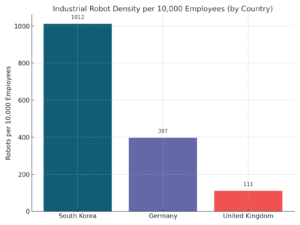
Despite this, the UK still has some catching up to do. With just 111 industrial robots per 10,000 employees, we’re well behind Germany (397) and far behind global leaders like South Korea (1,012). That gap represents a real opportunity for businesses to improve efficiencies and competitiveness.
But introducing robotic automation into your operations isn’t just about buying a robot or installing a system. It’s about making the right decisions, in the right order, with the right mindset.
Whether you’re at the early stages of exploring robotic automation or looking to expand your existing capabilities, here are five essential tips to help leaders approach adapting robotics automation.
1. Focus on the problem, not the technology
One of the most common missteps in robotic automation projects is starting with a solution in search of a problem. The excitement around new technology such as cobots, AI, and vision systems can sometimes overshadow the actual business need.
Instead, begin by identifying the challenges you’re trying to solve. Is it a bottleneck in production? Repetitive manual tasks? Quality or consistency issues? When you start with a clearly defined problem, you’re far more likely to find a robotic solution that delivers a measurable return. The technology should serve the process, not the other way around.
2. Keep it simple to start with
You don’t need a high-budget, fully integrated robotic cell to start seeing results. In fact, trying to do too much too soon can often lead to confusion, delays and underwhelming outcomes.
Simple, targeted robotic applications like automating a single repetitive task can generate quick wins and build confidence across the team. From there, you can scale and evolve based on what works with a more focused, manageable and effective approach.
3. Consider your people, not just your processes
Robotic automation doesn’t just change how things get made, it changes how people work. When introduced thoughtfully, it can free teams from repetitive or physically demanding tasks, reduce pressure, and create space for more valuable, skilled work. But without clear communication and engagement, it can also create uncertainty and resistance.
The human side of robotics is often where projects succeed or stall. Engaging your workforce early, listening to their insights, and supporting them through change is crucial. When people feel involved and informed, they are far more likely to support and sustain change.
5. Choose collaboration over transactions
Who you work with on a robotics automation project matters just as much as what you’re automating. Success comes from working closely with partners who understand your process, ask the right questions, and aren’t afraid to challenge assumptions, not just deliver hardware and walk away.
Look for robotics automation partners who take the time to understand your process in depth and can suggest adjustments that may improve the outcome even if it means stepping outside your comfort zone. Strong collaboration leads to better outcomes than any one-size-fits-all solution ever could.
6. Learn from those who’ve already done it
There’s a growing community of businesses who have already introduced robotic automation into their operations, and their experience can be one of your most valuable resources.
What worked well? What would they do differently? What challenges did they encounter along the way? Tapping into peer insights can help you avoid common pitfalls and sets realistic expectations for your own journey.
Robotic automation may involve advanced technology, but it’s ultimately a leadership decision and the more informed you are, the better you can lead your business through it.
Conclusion
Robotic automation isn’t just about installing a robot. It’s about leadership, clarity of purpose, and a willingness to evolve. The most successful businesses don’t see robotics as a threat to existing ways of working, they see it as a powerful tool to build on what already works and improve what doesn’t.
Getting it right takes more than investment. It takes thoughtful planning, collaboration, and a clear focus on the people who will be working with these systems every day. It also takes a willingness to start small, learn fast, and keep iterating.
Whether you are just beginning to explore robotics or looking to take your next step, now is the time to act. There is no one-size-fits-all approach but there’s a wealth of insight available from peers, partners, and industry experts who have already been there and done it.
Join us for a Modern Leadership Event: Finance & Robotics Automation
Are you a leader that is considering robotics automation for your business?
Join us on the 15th July for a Modern Leadership event: Finance, Robotics and Automation hosted by JJ Smith Woodworking and Machinery. Mark Lee, Head of Robotics at JJ Smith will be sharing insights into what makes robotic automation successful in the real world.
During the session, he will explore how to build a process around the robot, and the reality behind buzzwords like “cobots, AI, and vision systems.” He will highlight why simpler often means better (KISS principle), and why working closely with your automation partner, especially when it challenges your current processes, can lead to far better outcomes. He will also share a case study on this and how client demands has limited full potential.
If you are interested in exploring how successfully approach and implement robotics automation register now to attend: